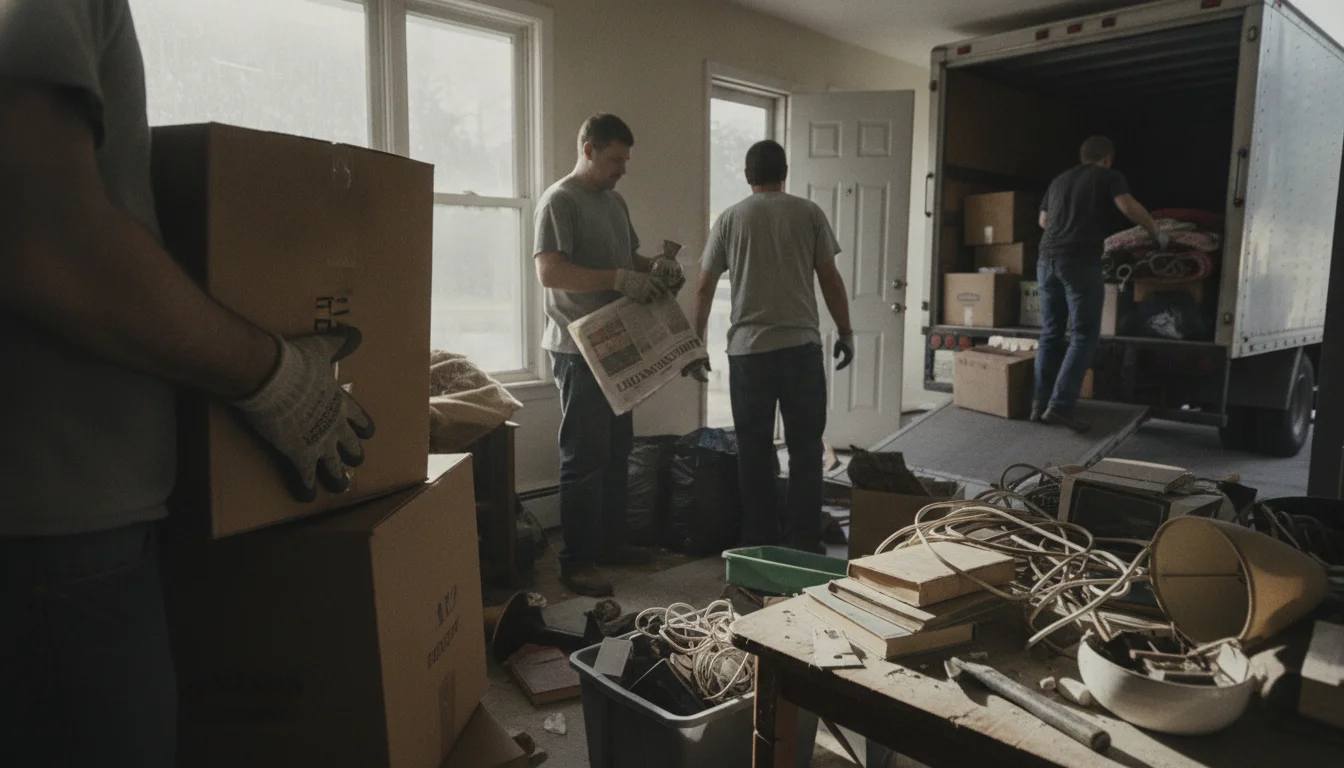
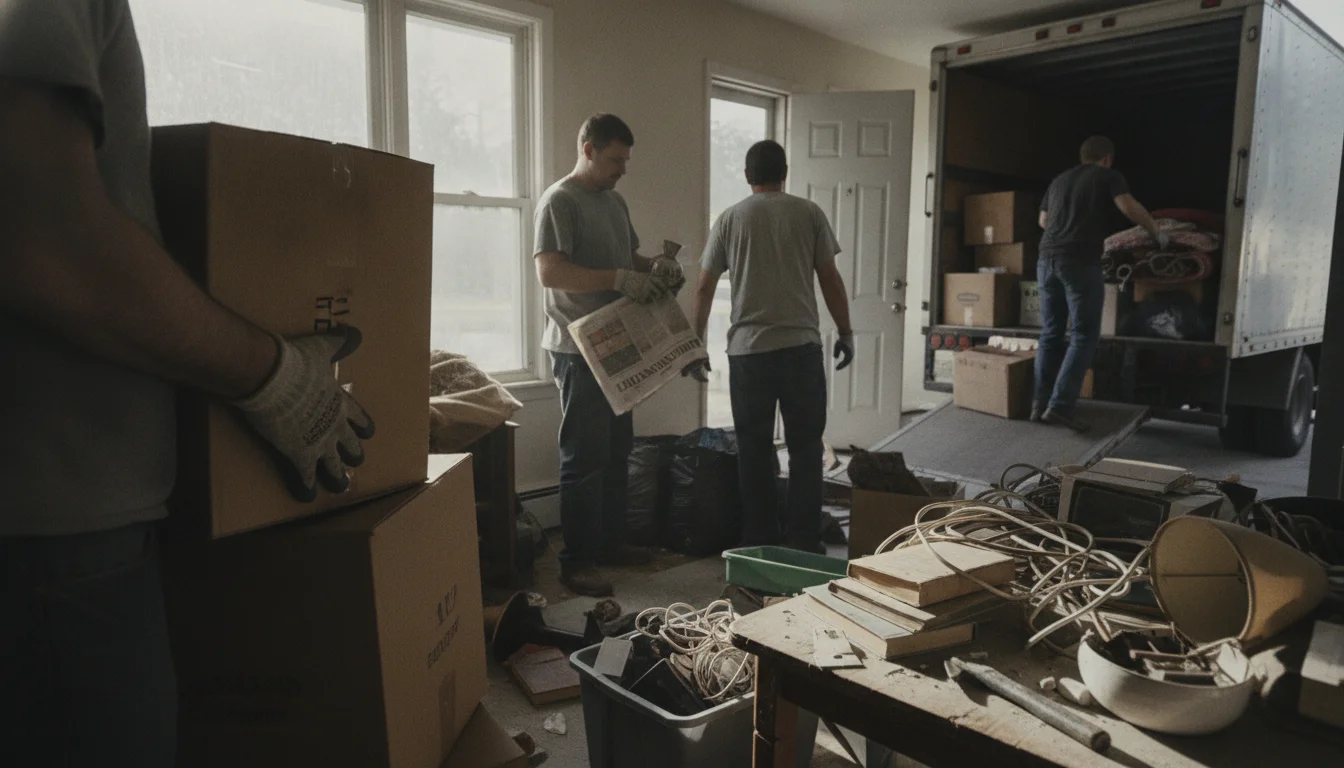
A house cleanout service is a full, organized removal of unwanted items from part or all of a home, including the haul-away and responsible disposal. In the first visit or photo review, the team clarifies what to take and what to leave; on service day they remove, sort, and sweep so the space feels complete. This guide explains what’s included, what isn’t, how the process and timelines work, how pricing is typically calculated, and how Bend OR Junk Removal helps homeowners plan a smooth, stress-free cleanout from first walkthrough to final sweep.
Key Takeaways
- A house cleanout service removes unwanted items from one room to the whole home and includes haul-away and disposal.
- Providers sort items for donation, recycling, and disposal, and offer a tidy sweep at the end so spaces feel finished.
- Costs vary by volume, labor, access, and disposal requirements; photo or on-site reviews lead to clear, written quotes.
- Hazardous materials and refrigerant-bearing appliances follow strict rules; providers coordinate compliant handling.
- A little prep—labels, clear paths, parking—saves time and keeps the job on schedule in Bend.
Table of Contents
- What a House Cleanout Service Covers
- The Step-by-Step Cleanout Process
- What Isn’t Included and Add-On Options
- Pricing: How House Cleanout Costs Are Calculated
- How to Prepare Your Home Before the Crew Arrives
- Responsible Disposal, Donation, and Recycling
- Timelines, Scheduling, and Choosing a Provider
What a House Cleanout Service Covers
A cleanout can focus on a single space or the entire home. Whole-home cleanouts cover every area—from bedrooms and kitchens to basements and garages. Partial cleanouts target a defined zone, such as an attic, storage room, or garage. Both options include the people, trucks, tools, and plan to remove items and leave the area tidied before the team departs.
Typical rooms include living rooms, kitchens, bedrooms, bathrooms, basements, attics, and garages. The crew removes furniture, boxes, clothing, small electronics, and everyday household junk. Many projects also include outdoor items like patio sets or bagged yard waste. Crews carry items out from where they are—no need to pre-stage at the curb.
Common items removed include sofas, tables, chairs, dressers, mattresses, box springs, rugs, small appliances, and toys. Crews often take holiday decor, sporting gear, and storage bins too. Refrigerators, freezers, and other large appliances can be removed when handled to code, which typically requires proper refrigerant recovery under EPA rules. For larger projects in Bend, a house cleanout often pairs well with Attic & Basement Cleanout or Residential Junk Removal to wrap up the job in one coordinated effort.
A reliable provider sorts items as they go—keep, donate, recycle, or discard. Donation-ready goods are set aside and routed to local partners when possible. Recyclables are separated for the appropriate stream. The remainder goes to approved disposal sites. Many teams include basic sweeping and a final look-through so the space feels truly finished.
Whole-home vs. partial cleanouts
Whole-home cleanouts are ideal for estates, downsizing, or major moves. Partial cleanouts work well for targeted goals like reclaiming a garage or preparing a guest room. The core steps stay the same while time and truck space scale up or down with the scope.
Common rooms and items typically removed
Expect removal from high-traffic rooms and deep-storage areas. Typical loads mix furniture, boxes, clothing, small appliances, and bagged trash. Specialty items may need extra handling, which a professional will flag during the walkthrough.
The Step-by-Step Cleanout Process
Cleanouts follow a clear sequence so you always know what’s next. Planning often starts with a quick form or message and then a visit to see the space. If an in-person estimate isn’t needed, detailed photos and a written list can work too. House cleanout service providers in Bend often pair estimates with a firm time window for the service day.
On the service day, the crew arrives in uniform, reviews the plan, and protects floors and doorways. They confirm what to take and what to leave. Clear labels help, and a short walkthrough saves time. The team then removes items room by room. They lift, load, and stack the truck safely so fragile items don’t shift.
Teams sort as they go. Reusable items are kept clean and separate. Recyclables go in their own section. Hazard checks happen for items like paints, chemicals, or appliances with refrigerant. When needed, specialized partners handle those items per local requirements. This keeps your home safe and materials out of the wrong stream.
After removal, crews sweep floors, wipe surfaces if needed, and remove any protective coverings. A tidy sweep isn’t a deep clean, but it makes the result look finished. Many providers also offer donation receipts when available so you’ll know where items went.
From on-site estimate to final sweep
- The team reviews scope and access.
- Work areas get protected.
- Items are removed, sorted, and loaded.
- The crew sweeps and tidies.
- You walk through to confirm results.
Post-cleanout walkthrough and verification
A final walkthrough lets you check each room. The lead confirms that keep items stayed in place. If something small was missed, they remove it then. Some teams share simple summaries of donation and recycling when those options were used.
What Isn’t Included and Add-On Options
Not everything can go on the truck. Hazardous waste is a special category. This includes fuels, certain chemicals, and some paints. These items follow strict rules and usually go to a county or city drop-off site. The U.S. Environmental Protection Agency explains how household hazardous waste must be handled to protect health and the environment (EPA HHW basics).
Refrigerators, freezers, and AC units may contain refrigerant. By law, refrigerant must be properly recovered—never vented. The EPA details this requirement under the Clean Air Act (EPA refrigerant management). A good provider will arrange proper recovery before the unit is hauled.
Guns, ammunition, and fireworks need special handling. Medical waste and sharps also require approved disposal channels. Large quantities of dirt, rock, or concrete are heavy and may call for a different truck or a separate service. Ask about local options for yard debris and tree branches in Bend. Many areas have drop sites or pickup programs.
Add-on services cover needs that go beyond hauling. Light demolition helps with sheds, playsets, and small interior items like non-load-bearing walls, carpet, or cabinets. Labor-only help is available for moving items within the home. Specialty hauling can handle pianos, safes, or fitness machines. These add-ons need to be planned in advance so the right crew and tools are scheduled.
If you’re managing a big mix of items, pairing services can help. Residential Junk Removal is a good fit for everyday clutter. Commercial Junk Removal may help if you’re clearing a home office or a storage space used for work.
Restricted and hazardous materials
Expect limits on fuels, chemicals, and medical waste. Appliances with refrigerants require compliant recovery. Local rules apply, and your provider will guide you to the right drop-off or partner.
Labor help, light demolition, and specialty hauling
These options cover shed tear-downs, carpet pulls, and moving heavy items. They aren’t standard in every job, so request them when you book to confirm scope and timing.
Pricing: How House Cleanout Costs Are Calculated
House cleanout pricing reflects the scope and logistics. Costs vary by the volume of items, the labor time, and the disposal path. Providers also factor in access, stairs, and the distance from door to truck. Cleanouts that involve sorting for donation and recycling can add steps but may reduce landfill use.
Volume is a primary driver—how much space your items take in the truck. Labor is also key: heavy items and long carries add time. Access matters too. Stairs, tight halls, and limited parking can slow the crew. Disposal fees reflect local sites and material type; some loads cost more to dispose of due to handling rules.
Quotes usually include the truck, crew, load, and a standard sweep. Add-ons like light demolition or piano moves sit outside standard quotes. Many providers offer ranges before a visit and a firm figure after they see the site. If a visit isn’t possible, a detailed photo set with notes is the next best thing.
Minimums exist because each job requires a truck and trained crew. Larger projects may have tiers based on the portion of a truck used. The best way to plan is to group items and share clear photos. That helps the team choose the right slot and truck size for work in Bend and nearby neighborhoods.
Volume, labor, access, and disposal fees
- Volume: space used in the truck.
- Labor: crew time and effort.
- Access: stairs, hallways, and parking.
- Disposal: site fees and material handling.
Minimums, tiers, and how quotes work
Expect a job minimum, then tiers for larger loads. A clear on-site review or photo-based estimate leads to a written quote that spells out what’s included.
How to Prepare Your Home Before the Crew Arrives
Good prep saves time and stress. Start by sorting items into four groups: keep, donate, sell, and discard. Use simple labels on doors or boxes. Move small keep items out of the way so pathways are open. Keep sets together when you can. This makes it easier and safer for the team to load.
Walk the path from each room to the exit. Clear shifting rugs, remove low tripping hazards, and prop doors open if safe. If you have pets, choose a quiet room for them during the visit. Keep your phone charged so questions can be answered quickly.
Parking matters in Bend’s tighter streets and shared driveways. If possible, reserve the closest spot for the truck. Note any low wires, tight turns, or gate codes. For high-rise or condo jobs, ask the building for elevator access windows and any move-in rules. Share these with the crew in advance. They may bring extra protection or smaller carts.
Day-of planning is simple. Walk the crew leader through the home. Point out keep, donate, and discard zones. Confirm any special items. If you want donation receipts, mention it now. If you’re pairing with Attic & Basement Cleanout, confirm both areas so the team can set the right order.
Sorting: keep, donate, sell, discard
- Keep: move to one room or closet.
- Donate: keep clean and boxed if possible.
- Sell: set aside and list later.
- Discard: leave in place; the crew handles it.
Access, parking, and day-of logistics
Clear a path, secure pets, and save parking near the door. Share codes, elevator rules, or HOA notes in advance so the team arrives prepared.
Responsible Disposal, Donation, and Recycling
A strong cleanout plan sends good items back into the community. Many charities accept furniture, clothing, small appliances, and housewares. Some regions have programs that take mattresses for recycling or reuse. The Mattress Recycling Council explains how mattresses are broken down into metal, foam, and fiber for new uses (MRC mattress recycling).
Recycling keeps materials in circulation. Metals, cardboard, and some plastics often have local drop-off streams. E-waste—like old TVs and small electronics—follows special rules. Many states guide safe e-waste drop-off so heavy metals don’t enter landfills. Your crew can separate e-waste and route it to the right site.
Yard waste can go to compost or mulch programs. Branches and leaves often have local drop sites. For tree branches, ask the City of Bend about green waste guidelines and hours. If you have a fridge or freezer, the unit must be handled per refrigerant rules before recycling; this is required and safer for your home and the environment.
When the job ends, you should know what left, where it went, and what remains. Some providers share basic notes or donation slips when offered by the receiving charity. This helps you track what was given and supports your records.
Key takeaways
- Donation and recycling reduce landfill use.
- Some items need special handling or compliant recovery.
- Ask for donation receipts when available.
- Local rules guide what goes where.
- Crews can sort for you during removal.
What can be donated and where it goes
Clean, working items have the best chance of a second life. Furniture, clothing, and housewares often go to local charities. Mattresses may be accepted through area programs or partners.
Recycling streams and landfill diversion
Metals, cardboard, e-waste, and yard waste each have a path. Ask your provider how they keep these streams separate to reduce landfill trips.
Timelines, Scheduling, and Choosing a Provider
Timelines depend on scope. A single room may take an hour or two. Whole-home projects often take half a day to a full day. Homes with stairs, heavy items, or long walks can take longer. Weather and parking can also affect outside paths. A good provider will set a window and update you if timing shifts.
Scheduling is flexible. Many teams offer weekday and weekend slots. Peak seasons align with moves and spring cleaning in Bend. If you have a deadline, book early. Share your must-finish dates and any access limits. This helps your crew plan the order of rooms and truck loads.
Choosing a provider means checking key points. Look for proof of insurance and licensing. Confirm they follow local disposal rules. Ask how they handle refrigerants and hazardous waste. See how donation and recycling are managed. Read recent reviews and ask about similar jobs completed in Bend. Bend OR Junk Removal works across Bend every week and can align a house cleanout service with your schedule.
To build confidence, ask about walkthrough steps, crew size, and how teams handle changes on the day. Good crews share a straightforward plan, communicate clearly, and leave spaces swept. They should also support special needs like labor-only help, light demolition, or pairing services such as Residential Junk Removal in Bend.
Frequently Asked Questions
- Where can I take old furniture?
You can take furniture in good condition to local donation centers. Many cities also run bulky-item drop-off days. If you need pickup and heavy lifting, a house cleanout service can remove items and route them to donation, recycling, or disposal based on condition.
How do I get rid of a mattress near me?
Check local mattress recycling programs or city bulky item pickup. Many areas accept mattresses at set sites. A cleanout crew can remove mattresses from any room and route them to recycling or disposal. Ask about donation only if the mattress is clean and undamaged.
- Who takes old freezers and fridges?
Old fridges and freezers must be handled under EPA rules for refrigerant recovery. Some utilities offer appliance recycling programs. A cleanout provider can arrange compliant recovery and haul-away. Confirm this step before pickup so the unit is safe to transport and recycle.
Where can I drop tree branches?
Many cities operate green-waste sites for branches, leaves, and yard debris. Some offer curbside collection on specific days. If you have a large pile, ask your provider about yard waste hauling. Crews can load branches and take them to an approved compost or mulch facility.
- How do I dispose of an old mattress?
If donation isn’t an option, look for a mattress recycling facility. Many break down foam, metal, and fibers for reuse. If access is tight, a cleanout crew can carry it out safely and route it to the correct site under local rules.
Conclusion
A clear plan, a capable crew, and the right disposal paths turn a hard job into a straightforward day’s work. With careful sorting, safe handling, and steady updates, your home ends clean and ready. For friendly help with your next project, Bend OR Junk Removal is here to make it easy. Contact us.
If you are not sure which of these you are dealing with, it is worth having someone look at it before it turns into a bigger job. Get in touch with Bend OR Junk Removal today and we will tell you where you stand.