Appliance disposal FAQs can help you choose the safest way to handle an old refrigerator, washer, dryer, stove, or dishwasher. Working appliances may be donated or reused. Broken units often belong in recycling or scrap programs. The right choice protects people and keeps useful materials out of landfills.
Table of Contents
- What is the most eco-friendly way to dispose of old appliances?
- Can refrigerators and freezers be recycled?
- How should washers, dryers, stoves, and dishwashers be disposed of?
- Can old appliances be donated instead of discarded?
- What are the rules for appliance disposal?
- How does appliance pickup work?
- How much does appliance disposal cost?
- Frequently Asked Questions
- Key Takeaways
- Conclusion
What is the most eco-friendly way to dispose of old appliances?
The best choice depends on the appliance’s condition. A clean, safe, working unit may be reused or donated. A damaged unit should usually go to a proper recycling or disposal program. This keeps metal, glass, plastic, and other parts out of regular trash.
Bend OR Junk Removal helps Bend property owners sort through these choices before pickup. The right plan can protect workers and prevent spills. It can also keep restricted materials out of normal waste streams. Appliance disposal is more than moving a large item. Each part should go to the right place.
When should an appliance be reused or donated?
Reuse often works best when an appliance runs well and has no safety issue. The unit should be clean, complete, and ready for another home or business. A donation group may ask for working controls, safe cords, and proof that the appliance can be tested.
Do not donate a unit with a damaged cord, gas leak, broken door, exposed wire, or major water damage. These issues can put the next user at risk. Repair may make sense for a newer appliance. An older unit with many faults may be better for recycling.
When is recycling the better option?
Recycling is often best when an appliance cannot be used safely or at a fair repair cost. Recyclers can separate metal, wire, plastic, glass, and other parts. They can also handle refrigerants, oils, insulation, and electronic controls with the right tools.
Do not place a large appliance at the curb without checking local rules. Some areas require scheduled pickup or special drop-off. Bend OR Junk Removal can help Bend homeowners decide if a unit belongs with donation, recycling, scrap recovery, or another disposal route.
Can refrigerators and freezers be recycled?
Yes, refrigerators and freezers can often be recycled. They need careful handling first. These units may contain refrigerant, oil, foam insulation, and electrical parts. A qualified program should manage those materials before the metal shell is processed.
The U.S. Environmental Protection Agency explains federal refrigerant management rules for equipment that contains certain refrigerants. Rules may vary by appliance and handling method. Do not cut lines, remove compressors, or release refrigerant yourself.
Why do refrigerants and insulation need special handling?
Refrigerant is the fluid that helps a cooling appliance remove heat. It must be recovered with the right equipment. Trained workers should handle this task. Foam insulation may also contain materials that should not enter normal household waste.
A refrigerator can look empty and harmless while still holding these materials. This is why normal trash pickup may not work. A responsible provider checks the unit and plans safe movement. The provider then sends it through a route that can handle the cooling system.
What parts of a refrigerator can be recovered?
Many refrigerators contain useful steel, aluminum, copper, plastic, glass, and wire. The compressor, shelves, doors, and controls may be separated during processing. Some parts may be reused. Other parts are prepared for material recovery.
Remove food before pickup and wipe away loose spills. Do not try to drain refrigerant or take apart the compressor. Keeping the unit whole helps trained workers move it safely. It also helps them decide how each part should be handled.
How should washers, dryers, stoves, and dishwashers be disposed of?
Washers, dryers, stoves, and dishwashers should be checked before removal. Working units may be reused or donated. Broken units often go to a recycling or scrap site. There, workers can separate metal, wire, motors, plastic, and other parts.
The right route depends on the design and condition of the appliance. Gas equipment needs extra care because a connected line can create a serious hazard. Electric appliances may still hold water. They may also have sharp edges, heavy motors, or damaged wires.
Which appliance materials can be recycled or scrapped?
Large appliances often contain steel and other metals that can enter a scrap or recycling stream. Washers may have metal drums, motors, wires, and plastic parts. Dryers may contain sheet metal, heating parts, motors, and controls. Stoves and dishwashers may contain steel, glass, wiring, and electronic panels.
A recycling facility decides which parts can be recovered. The process can differ by facility and local equipment. Do not assume every part belongs in a curbside bin. Large-item recycling often needs a separate drop-off or pickup.
What preparation is needed before pickup?
Preparation lowers risk and makes removal easier. Follow the maker’s shutdown steps. Arrange utility disconnection when needed. A qualified person should handle gas, water, and electrical connections when the work is not safe for a homeowner.
Before pickup, owners should:
- Empty and clean the appliance.
- Remove loose shelves, racks, and stored items.
- Secure doors, lids, and moving parts.
- Clear a wide path from the appliance to the exit.
- Tell the pickup provider about stairs, narrow doors, or damaged floors.
A homeowner can often clean and empty an appliance safely. Disconnecting gas lines is different. Refrigerant work and exposed wiring also need proper care. These tasks should not become casual do-it-yourself work.
Can old appliances be donated instead of discarded?
Yes, donation may work when an appliance is clean, safe, complete, and working. Each group has its own rules for age, size, condition, and access. Some groups accept only tested appliances. Others accept only certain types of equipment.
Donation keeps a useful item in service. It may also reduce the need for new materials. Still, confirm acceptance before moving the unit or planning transport. A group may refuse an appliance that does not meet its rules.
What condition should an appliance have for donation?
A donated appliance should work as it should and have no known safety problem. It should not have a frayed cord, broken plug, cracked glass, heavy mold, active leak, or missing safety part. Tell the donation group about known faults instead of passing the problem to another home.
Clean surfaces matter too. Food residue, heavy grease, standing water, and strong odors may lead to refusal. Simple cleaning is often safe for a homeowner to do. Let the unit dry before moving it.
How do donation rules vary by appliance type?
Refrigerators and freezers may need proof that cooling works. The door seal may also need to be intact. Washers and dishwashers may need to run without leaks. Dryers may need a working drum, safe cord, and clear lint area. Stoves may need working controls and safe burners or heating parts.
A donation group may limit older models or units with missing parts. Bend OR Junk Removal can help property owners sort usable items from units that need recycling. If donation is not accepted, specialized appliance recycling may be the next responsible choice.
What are the rules for appliance disposal?
Appliance disposal rules depend on the local government, waste site, appliance type, and materials inside the unit. Some places require special handling for refrigerators, freezers, air conditioners, and other cooling equipment. Other rules cover bulky items, scrap metal, and curbside pickup.
Check with the local waste department before setting out a large appliance. You can also ask a qualified removal provider. Rules may cover pickup dates, preparation, refrigerant recovery, blocked sidewalks, and approved drop-off sites.
Why do local disposal and recycling rules matter?
Local rules help stop unsafe dumping and protect collection workers. They also guide residents to sites that can handle refrigerants, oils, electronics, glass, and heavy metal parts. A plan that works in one town may not work in another area.
This matters for homes, rentals, offices, stores, and renovation work. Property owners should protect tenants and keep shared paths clear. In Bend, responsible removal means checking the route before the appliance leaves the property. Nearby areas may have different rules as well.
Which appliances may require approved handling?
Cooling appliances often need approved handling because of refrigerant and compressor parts. Gas appliances may need careful disconnection. Units with electronic controls may also need special processing at a recycling site.
Never burn, crush, cut, or abandon a large appliance. Do not place a refrigerator or freezer in a normal trash container unless local officials clearly allow it. A proper appliance removal service can find a safer next step without asking you to take apart the unit.
How does appliance pickup work?
Appliance pickup usually starts with a description of the unit, its condition, and the path out. The provider may ask if it is a refrigerator, washer, dryer, stove, or dishwasher. Details about stairs, elevators, tight halls, gates, and utility lines help the crew plan.
Bend OR Junk Removal serves customers across the Bend area. The company can help arrange removal for homes, rentals, offices, and other properties. The process should focus on safe lifting, careful movement, and responsible sorting after collection.
What should owners do before pickup?
Empty the appliance and remove nearby clutter. Keep children and pets away from the work area. A clear path can help prevent damage to walls, floors, doors, and the appliance. Share known hazards before the crew arrives.
Useful details include:
- The appliance type and approximate size.
- Whether the unit works, is damaged, or is leaking.
- The number of stairs or tight turns along the path.
- Any gate, parking, elevator, or access limits.
- Whether the appliance connects to water, gas, or electricity.
Do not hide a damaged cord, leak, pest issue, or unstable appliance. Clear details help the provider choose the right tools. They also help the crew plan safe handling.
How are heavy appliances removed safely?
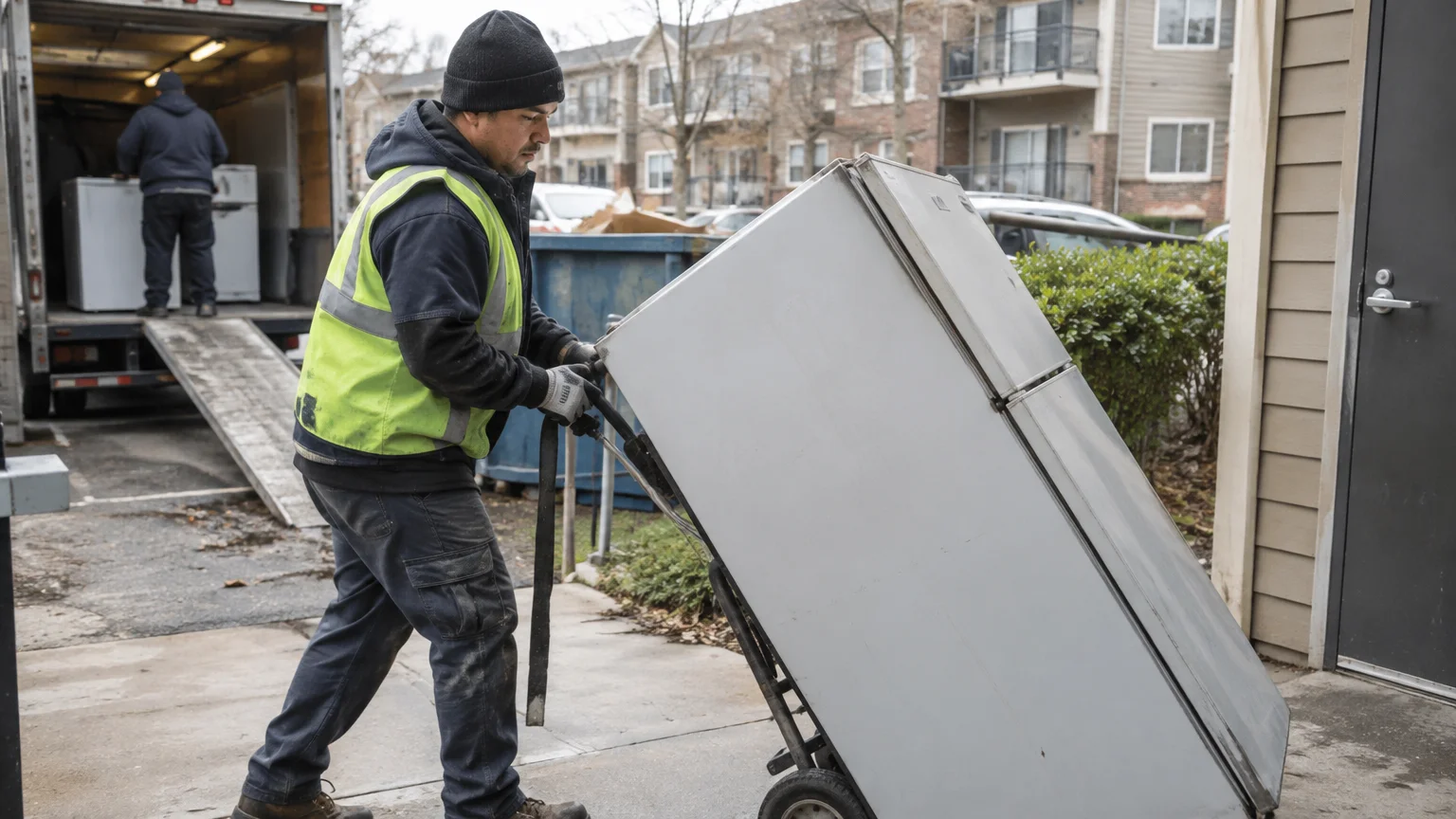
Heavy appliances are moved with controlled lifting, hand trucks, straps, and teamwork. Crews may protect floors and door frames while guiding the unit through tight spaces. They should not drag an appliance across finished flooring or tip it without a safe plan.
Refrigerators should stay upright as much as possible. Washers can hold hidden water. Dryers and stoves may have sharp edges. A trained crew checks the route first and keeps the appliance stable from the room to the vehicle.
How much does appliance disposal cost?
Appliance disposal costs vary by the unit, access, condition, location, and disposal route. A small unit near an exit may be easier than a large appliance in a basement or upper floor. Refrigerant handling, extra labor, difficult access, and special facility rules may affect the quote.
Compare the job details instead of assuming every removal is the same. One dishwasher may be simpler to move than several large units. A refrigerator with a clear path may be easier than a damaged unit behind tight doors or stairs. The final cost is confirmed on a quote after the details are reviewed.
What affects the cost of removal and disposal?
The main factors include the number and size of appliances. Distance from the unit to the vehicle also matters. Stairs, elevators, narrow doors, long carries, and limited parking can make the work harder.
The disposal route matters too. Donation may require a usable condition and an accepting group. Recycling may need a site that handles refrigerants or electronics. Scrap handling may depend on which materials can be recovered. The final cost is confirmed on a quote after the job details are reviewed.
How do recycling, donation, or scrap handling affect the quote?
Each route has different handling needs. Donation may require testing, cleaning, and careful transport. Recycling may require sorting and approved processing. Scrap recovery may involve separating heavy metal from plastic, glass, wire, and other parts.
Ask what happens after pickup. Also ask whether reusable items are separated from recyclable materials. Bend OR Junk Removal can explain the available plan for Bend properties. The owner can then choose a practical route before scheduling work.
Frequently Asked Questions
How can someone get rid of an old refrigerator?
An old refrigerator should go through donation, approved recycling, or specialized appliance disposal. Empty it first and do not cut refrigerant lines. Check local rules before pickup. A removal provider can move the unit safely and send it to a site that handles refrigerants and useful materials.
Can an appliance go in a regular dumpster?
Large appliances usually should not go into a regular dumpster without checking the provider and local rules. Refrigerators, freezers, and some other units may need special handling. Ask about accepted materials before placing an appliance in a container or at the curb.
Is appliance pickup always available?
Pickup is not available in every area or for every appliance. Some programs accept only certain working units. Others limit service by location, condition, or appliance type. Confirm the rules instead of assuming that appliance removal options near you apply to your property.
What happens to old appliances after pickup?
Old appliances may be donated, taken apart for material recovery, recycled, or sent through another approved route. The result depends on condition and local site rules. Responsible handling can recover metals and other parts. It can also keep refrigerants, oils, and unsafe materials out of ordinary waste.
Does a homeowner need a professional to prepare an appliance?
A homeowner can usually empty, clean, and clear access around an appliance. Professional help may be needed for heavy lifting, refrigerant handling, gas connections, exposed wires, or hard removal paths. When safety is not clear, stop and use a qualified service instead of taking apart the unit.
Key Takeaways
- Working appliances may be reused or donated when they are clean, safe, and complete.
- Broken refrigerators and freezers need careful handling because of refrigerants, oils, insulation, and compressors.
- Large appliances should not enter regular waste streams without checking local rules first.
- Clear access and honest condition details help make pickup safer and easier.
- The final quote depends on the appliance, access, labor, and disposal route.
Conclusion
Responsible appliance disposal starts with a simple condition check. A working unit may help another household through donation. A damaged unit may fit recycling or scrap recovery better. Refrigerators and freezers need extra care because their cooling systems can contain materials that require approved handling.
Homeowners, landlords, business owners, and property managers should check local rules before placing an appliance outside. They should also clear a path and avoid unsafe work with gas, refrigerant, or damaged wiring. Bend is best served by a plan that matches the appliance and the property. Contact us to arrange appliance pickup and discuss the right disposal option.