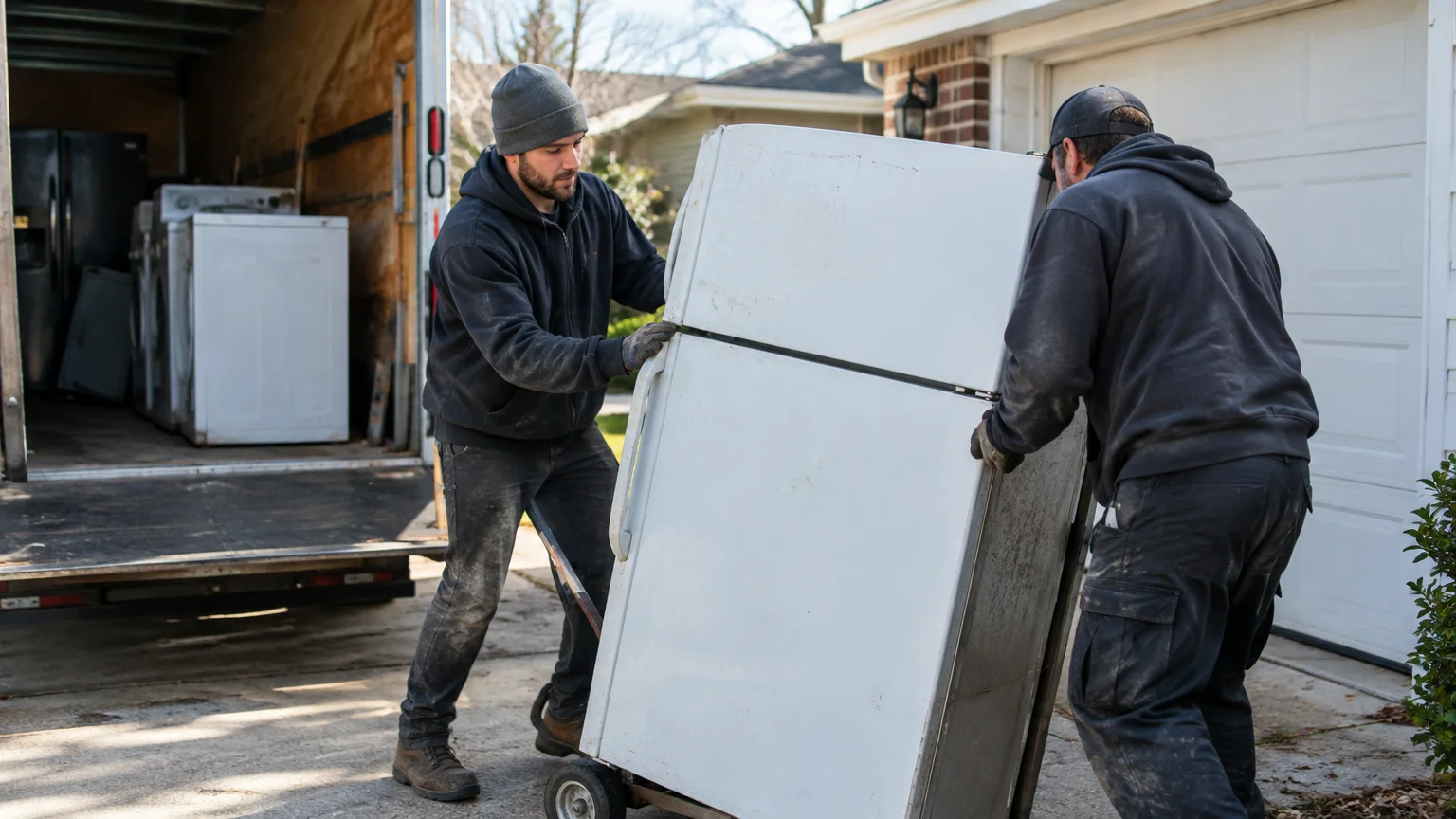
These appliance pickup FAQs explain what can affect a quote, how to prepare, and what may happen after collection. The appliance’s size, condition, and location all shape the work. In Bend, homeowners can ask a local appliance removal service about safe pickup and possible reuse or recycling options.
Old refrigerators, washers, and dryers can take up space and be hard to move. They may also be unsafe to carry without help. Bend OR Junk Removal serves homeowners who want clear steps for removing bulky appliances. Knowing what to ask can make pickup day easier for homeowners, property owners, and local businesses.
How much does appliance pickup cost?
The final quote depends on the appliance, its size, its condition, and how easy it is to reach. A small appliance near an open exit is often a simpler job than a large refrigerator upstairs. The provider confirms the final cost in a quote before work begins. Each business sets its own pricing, so ask about the work included in the quote.
What factors affect the cost of removing an appliance?
The provider may ask what kind of appliance needs removal, whether it works, and where it is in the home. Stairs, narrow halls, tight doors, or a long path to the truck can make moving it harder. Moving other items out of the way may also add work.
The appliance’s condition matters, too. A broken unit may have loose parts or sharp edges that need care. A refrigerator or freezer can be large and may need special handling. Share these details when setting up pickup so the team can plan how to move it.
A quote should match the job the provider has been asked to do. Ask what the quote covers and whether adding another appliance changes the work. You do not need to guess or agree before you understand the plan. Clear details help everyone know what to expect, and the final cost should be confirmed in a quote.
How does appliance pickup compare with other household junk removal?
Picking up one appliance is often simpler than clearing a whole home. Still, its weight and location can change the work. A washer beside an easy exit may be easier to move than a refrigerator that must pass through tight turns. A full junk removal job may include many kinds of items and more sorting.
People may compare appliance pickup with other services or ask which option fits their item. The answer can depend on the appliance, its condition, local programs, or a retailer’s current services. Pickup choices vary, and not every provider accepts every item. Ask what applies before setting up pickup. Do not assume every service accepts your appliance or serves your area.
What happens to appliances after pickup?
After pickup, an appliance may go for reuse, donation, recycling, or another suitable disposal option. The next step depends on its condition, type, and what local facilities accept. Bend OR Junk Removal can explain the handling plan before the team removes the item. Options may differ for appliances picked up in Bend.
Which appliances may be recycled or donated?
Working appliances in usable condition may be right for reuse or donation. This depends on the item and the receiving group’s rules. A clean, working microwave may be easier to pass on than a damaged one with missing parts. Donation groups may have rules about age, safety, and pickup.
Appliances that cannot be reused may have parts or materials that local recycling programs accept. Rules differ by item and location, so do not assume every appliance can go in curbside recycling. Refrigerators, freezers, washers, dryers, ranges, and dishwashers may each need a different next step.
When asking about appliance removal, ask whether the provider checks for reuse or recycling options. You can also ask what happens if an appliance is broken or a local program will not accept it. A clear answer helps you understand the plan. It also avoids promises about where every item will go.
Why do refrigerators and other appliances need special handling?
Large appliances can be heavy, awkward, and hard to grip. Refrigerators and freezers may also have parts that need careful handling. Do not drag an old fridge outside or take it apart without knowing what the job involves.
Some appliances may hold water, food, lint, or other leftover material. Emptying and cleaning them, when safe, can make handling easier. If a unit has a damaged cord, exposed parts, or a leak, keep children and pets away. Tell the pickup team about the problem before work starts.
You may also ask how to get rid of an appliance that still works. Reuse or donation may be possible, but it depends on the item and local rules. A local service can explain the options it offers and any limits before collection.
How should I prepare for appliance pickup?
Empty the appliance, clear a path, and share safety concerns before pickup. You do not need to move a heavy appliance yourself. Simple steps can help the team see the route and plan a safer move. In Bend, tell the provider about any access limits when you arrange service.
Should I disconnect and empty the appliance first?
Remove loose food, clothes, dishes, or other items when it is safe. Defrost a freezer if needed, and keep meltwater from making the floor slippery. Take out loose shelves only if they come out easily and you can handle them safely.
Do not disconnect gas lines, fixed wires, or plumbing unless you know how to do so safely. A qualified person should handle work with gas, wiring, or fixed water lines. If the appliance is still connected, tell the provider when arranging pickup. Ask what must happen before removal.
You can handle simple checks yourself. Empty the unit, remove loose items, and clear the path. Get qualified help when disconnection involves gas, fixed wires, hard-to-reach plumbing, or another unsafe task. Never cut a cord or force a connection loose to prepare for pickup.
How can I make the pickup area safe and accessible?
Clear small items from the route between the appliance and the exit. Move rugs, toys, bins, and anything else that could cause a fall. Keep children and pets away while the team moves the appliance.
Tell the provider about stairs, narrow doors, gates, low ceilings, or other tight spots. A short description can help the team plan the move. If the appliance is in a garage or attic, make sure the entrance and path are open, bright, and easy to reach.
Do not try to lift or tilt a heavy appliance alone. It could tip, trap fingers, damage floors, or hurt someone. If it blocks an exit or sits in a risky place, explain that when arranging pickup. The team can then plan around the problem.
What happens on pickup day?
The team checks the appliance and the route before moving it. The steps depend on the home, the appliance, and what you agreed on ahead of time. Point out the item and share any hazards or access limits before removal begins.
How is the appliance removed from the home?
The team may protect nearby floors or walls and use suitable moving tools. They can check the best path and see whether a doorway or tight turn changes the plan. Keep the route clear and stay away from the lifting area.
If the appliance is still connected to plumbing, gas, or fixed wires, a qualified person may need to disconnect it first. Do not expect the pickup team to handle an unsafe connection unless you have confirmed that work is part of the agreed service. Asking about this before pickup can prevent confusion on the day.
You may also arrange appliance removal during a renovation, move, or larger cleanout. In that case, point out which items are included and which should stay. This check can keep a useful appliance or household item from being taken by mistake. Clear plans help with office cleanout FAQs, retail removal FAQs, and house cleanout FAQs, too.
What should I expect after the appliance is taken away?
Once the appliance is gone, check the area for loose parts, water, or debris. A quick sweep can leave a garage, laundry room, or kitchen ready for its next use. Ask the team if anything needs attention before they leave.
The provider should explain what happens next based on the plan discussed before pickup. Reuse, donation, recycling, and disposal depend on the appliance’s condition and local options. You can ask about the handling route, but a receiving group or facility may have its own rules.
For a larger home cleanout, appliance pickup may be one part of the work. Sort other items separately and ask whether the provider handles them. Keeping the request clear helps the team focus on the items you agreed to remove. It also makes the next steps easier to manage.
Frequently Asked Questions
How can someone get rid of an old fridge?
Ask a local appliance removal service whether it accepts refrigerators and what preparation is needed. Empty the fridge and remove food or water when safe. Do not disconnect gas, wiring, or fixed plumbing without qualified help. Reuse or recycling depends on the fridge’s condition and local rules.
Can a broken appliance be picked up?
Many providers can remove broken appliances, but acceptance and handling depend on the item and its condition. Tell the provider what is broken, whether it has sharp or loose parts, and where it sits. Keep children away from damaged units. Do not take one apart unless you can do so safely.
What appliance pickup options are available near me?
Options through a local program, retailer, or provider vary by item and location. Some accept only certain appliances or items that still work. Ask what pickup includes, whether your appliance qualifies, and how it will be handled. The final cost is confirmed in a quote after the job details are reviewed.
Do I need to move the appliance outside before pickup?
Usually, you should not move a heavy appliance outside alone. Leave it where it is and tell the provider about stairs, tight spaces, or connections. A trained team can check the route and plan the move. Arrange qualified help if the unit has fixed wires, gas, or plumbing that must be disconnected.
Conclusion
Appliance pickup is easier when you know what the provider accepts, clear a path, and share safety concerns early. The final quote depends on the appliance and the work needed. Reuse and recycling depend on its condition and local options. Contact us to arrange appliance pickup with Bend OR Junk Removal.
Key takeaways
- Share the appliance type, condition, and location when arranging pickup.
- Clear a safe path, but do not lift or disconnect risky items yourself.
- Ask which reuse, donation, recycling, or disposal options may apply.
- Review the job details and final quote before removal begins.
If you are not sure what you are dealing with, it is worth having someone look at it before it turns into a bigger job. Get in touch with Bend OR Junk Removal today and we will tell you where you stand.