A professional office furniture removal service helps when desks, cubicles, tables, or chairs are unsafe or hard to move. The right crew can plan pickup, clear work areas, move heavy pieces, and sort reusable materials. This can help Bend businesses stay on track during a renovation, move, or closure.
Table of Contents
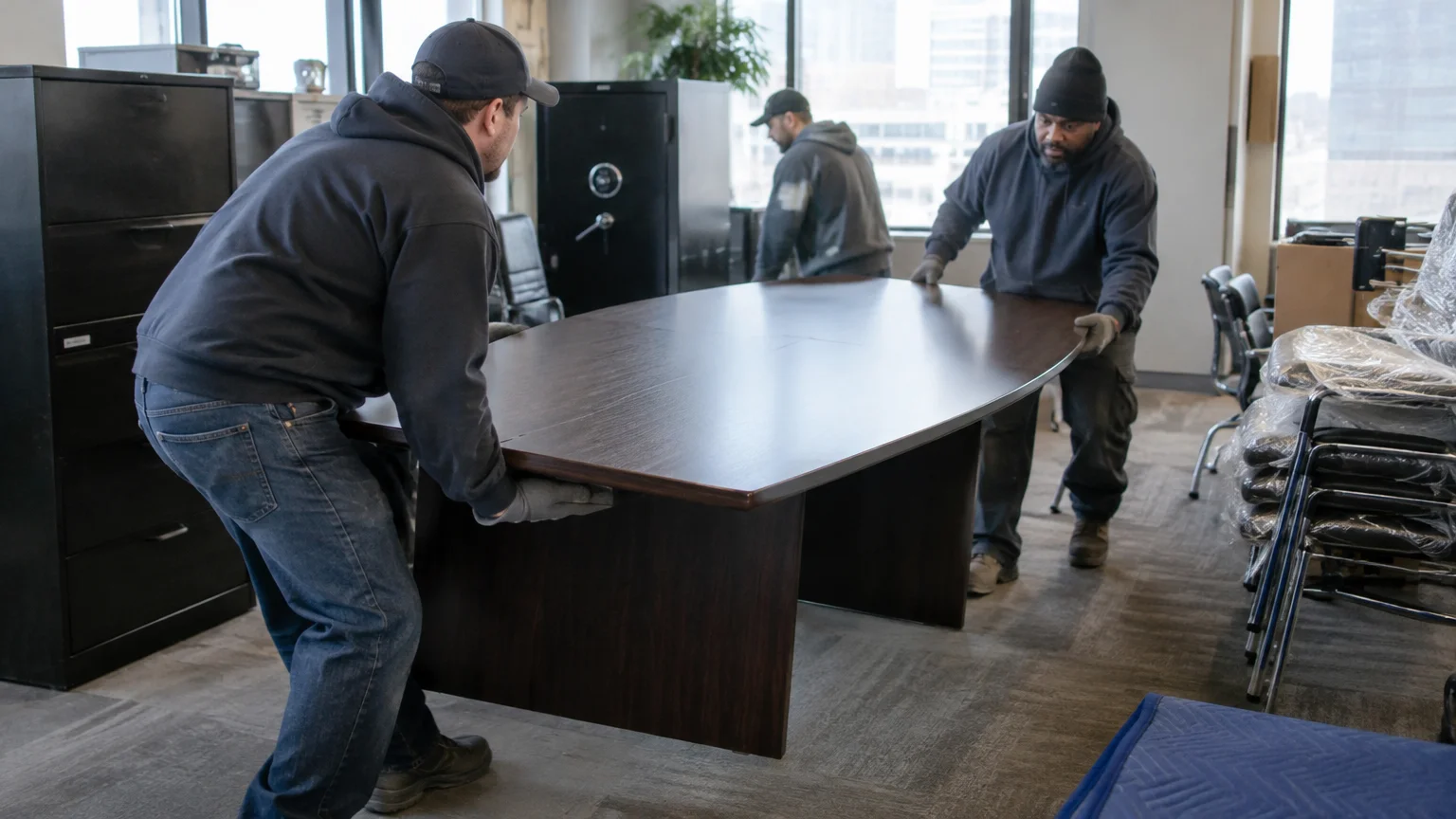
- Why does outdated office furniture become a problem?
- Is your office renovation creating more furniture than you can handle?
- Are desks and workstations taking up valuable space?
- Do you have more office furniture than your team can move safely?
- Has a business closure or relocation left furniture behind?
- What should you do with unwanted cubicles and conference tables?
- Is office furniture blocking access, storage, or shared areas?
- How does a professional office furniture removal service work?
- How much does professional office furniture removal cost?
- How can you prepare for an efficient office furniture pickup?
- Frequently Asked Questions
- Key takeaways
- Conclusion
Why does outdated office furniture become a problem?
Old office furniture becomes a problem when it uses needed space or creates safety risks. Broken chairs, worn desks, and unused cabinets can make a workplace hard to clean. They can also delay a move, remodel, or property handoff.
How worn or unused furniture affects workspace safety
Old furniture may have loose legs, sharp edges, broken wheels, or weak shelves. These faults can cause trips, cuts, or falling items. A damaged piece may also block a path or sit too close to a door.
A business does not need a professional for every small task. Staff can move light items when the path is clear and the furniture is safe. They should not lift heavy desks, glass tables, or full cabinets without proper help.
Common warning signs include:
- Furniture with broken frames, sharp edges, or loose parts
- Desks and chairs blocking paths or active work areas
- Filing cabinets filled with items no one needs
- Old pieces that no longer fit the office plan
- Furniture stored near doors, stairs, or shared paths
When storage becomes a costly temporary solution
Storage can seem easier than making a choice. Yet unused furniture still takes space and needs future planning. It may fill a basement, loading area, or spare room that the business needs for work.
A professional furniture removal team can help Bend OR Junk Removal customers sort the next step. Some pieces may be reused, while others may need recycling or disposal. In Bend, local rules and facility options may affect how materials are handled.
Is your office renovation creating more furniture than you can handle?
An office renovation can create many unwanted items at once. Desks, seats, partitions, tables, and storage units may need to leave before work starts. Planning early helps keep the work area open.
Managing desks, tables, seating, and fixtures during renovations
A renovation plan should list each item that will stay, move, be donated, or leave. This keeps workers from moving the same furniture more than once. It also helps the removal crew understand the job before pickup day.
Clear files and personal items from desks and cabinets first. Keep records, electronics, keys, and company property with the business. Furniture attached to walls, floors, or power may need a qualified worker to disconnect it.
Do not place unwanted items in hallways while waiting for pickup. This can limit access and create a trip risk. A staging area is safer when it does not block doors, stairs, exits, or equipment.
Why removal planning should happen before construction begins
Plan removal before demolition or new work starts. Contractors need room to work, and large furniture can delay deliveries. It can also damage floors or finished surfaces.
Some office furniture has glass, metal, wood, foam, or mixed parts. Sorting these materials may take more time than expected. A planned pickup can help the business meet its work schedule.
Bend OR Junk Removal can help Bend businesses decide which items should leave first. A clear plan makes office furniture pickup easier for staff, contractors, and property owners.
Are desks and workstations taking up valuable space?
Desks and workstations may need removal when they sit unused or crowd active areas. Extra furniture can limit movement and make a small office feel tighter. Removing surplus items can create room for useful work.
Recognizing when surplus furniture is limiting productivity
An office may have too many desks after remote work changes, a staff reduction, or a new floor plan. Empty stations can collect dust and hold boxes. They may also make floors harder to clean and outlets harder to reach.
Modular workstations can be hard to manage. They may include panels, brackets, shelves, wire channels, and connecting parts. Keep these parts together if the furniture will be used again. If not, group the pieces for easier removal.
A cleanout service is a planned removal of unwanted items from a property. It may cover one room, a full office, or several areas during a move. The business should decide whether it needs a small furniture pickup or a larger office cleanout.
Preparing modular desks and workstation components for pickup
Remove files and personal items from each desk before pickup. Label anything that will stay. Keep assembly instructions, keys, and special parts separate from items leaving.
Workers should not take apart furniture with wiring, glass, or heavy panels unless they know it is safe. A professional crew can review the pieces and decide what needs disassembly. This helps protect walls, floors, and nearby equipment.
The best removal plan matches the furniture to the available space. In the main Bend area, businesses from Old Mill District and Awbrey Butte to Redmond, Sisters, Tumalo, Sunriver, and nearby communities can arrange help for workplace furniture and other junk.
Do you have more office furniture than your team can move safely?
A business needs professional help when furniture is heavy, awkward, damaged, or hard to carry. A team should not risk an injury to save time. Safe removal also protects walls, floors, doors, and other property.
Common lifting and handling risks with bulky workplace items
Office furniture can be hard to balance. A desk may be wide but light, while a full cabinet may be narrow and heavy. Glass conference tables can break in tight halls or near stairs.
Employees also face risks when they move furniture without enough people or proper tools. Twisting while lifting can strain the back. Carrying items down stairs can hurt workers and damage the building.
A professional crew may be useful when furniture involves:
- Heavy desks, cabinets, safes, or conference tables
- Long pieces that cannot turn through doorways
- Glass, sharp metal, or loose parts
- Upper floors, basements, stairs, or narrow halls
- Items that need careful loading near finished surfaces
Why professional crews help protect employees and property
A trained removal crew can plan the route before moving large pieces. The crew can protect door frames, floors, and nearby walls. It can also separate furniture from other junk during loading.
Simple upkeep can remain a do-it-yourself task. Employees can empty drawers, remove labels, and gather small office items. They should leave heavy lifting, hard disassembly, and unsafe access to people with the right equipment.
For a business in Bend, local help can reduce the time that large furniture stays in the way. It also gives owners and managers one clear plan for a difficult removal job.
Has a business closure or relocation left furniture behind?
A closure or relocation often leaves more furniture than expected. A former office may contain desks, chairs, shelves, cubicles, and tables with no new use. A removal plan can help meet a lease, sale, or move-out deadline.
Creating a removal plan for move-out deadlines
Start by checking every room. Look in offices, meeting rooms, break areas, storage rooms, basements, and loading spaces. List large items and mark anything that belongs to a new tenant or property owner.
Check drawers and cabinets for records. Handle sensitive papers under the company’s own rules. Computers, monitors, phones, and other electronics may need a separate recycling plan.
A move-out checklist should include:
- Furniture that must leave the property
- Items that will remain for the next occupant
- Access points, elevators, stairs, and loading areas
- Building rules for pickup and removal work
- The date when the property must be empty and clean
Handling furniture left by former tenants or occupants
Property owners should confirm who owns abandoned furniture before arranging removal. A lease, written notice, or local rule may affect the next step. When ownership is clear, the owner can sort useful items from damaged ones.
Large cleanouts often include more than furniture. A team may find appliances, boxes, shelving, carpet, and general junk. Separate plans may be needed for items that cannot go with regular furniture.
Bend OR Junk Removal can help property owners organize a practical office furniture removal plan. The goal is a clear space ready for its next use.
What should you do with unwanted cubicles and conference tables?
Sort unwanted cubicles and conference tables by condition, material, size, and possible reuse. Usable pieces may go to another office or donation group. Damaged parts may need recycling or disposal at an approved facility.
Separating reusable, recyclable, and disposal-bound items
A simple sorting process keeps choices clear. First, set aside clean and usable furniture. Next, group metal, wood, cardboard, and other materials when possible. Then identify pieces that are broken, stained, unsafe, or too damaged to reuse.
Do not assume every item belongs in a regular dumpster. Large tables may need special handling. Mixed-material cubicles can also be hard to separate. Local facilities may have their own rules for business waste.
The phrase free furniture removal can sound appealing, but businesses should check what any service includes. Item type, access, availability, and local disposal rules can affect whether a provider accepts furniture.
Why oversized furniture may require special handling
Conference tables often have wide tops, heavy bases, or glass sections. Cubicles may include connected panels and power channels. These features can make removal harder than moving one desk or chair.
A crew may need to take parts apart, protect the route, and load materials in a safe order. It may also need to work around tenants, customers, or active employees. Planning matters when the office must stay open during pickup.
Responsible removal means keeping usable items separate when possible. It also means avoiding unsafe dumping or leaving large furniture beside a public road. Bend area customers can ask about a plan that fits the property and items.
Is office furniture blocking access, storage, or shared areas?
Remove office furniture when it blocks halls, loading zones, exits, storage areas, or shared workspaces. Even sound furniture can cause trouble when it limits safe movement. Clear access matters during work and emergencies.
Clearing hallways, loading areas, and emergency access routes
Keep hallways and doorways open whenever possible. Furniture near an exit can slow people when they need to leave. Items in loading areas can also interfere with deliveries, maintenance, or emergency response.
Do not use stair landings or exit paths as long-term storage. A quick staging spot can become a lasting hazard when no pickup date is set. Move items to a safe, approved area instead.
Businesses can remove small, light items when the route is safe. Large or unstable furniture needs a better plan. A professional crew can review the path and choose a safe way to move each piece.
Removing bulky items from basements, upper floors, and tight spaces
Basements and upper floors often make furniture removal harder. Stairs, low ceilings, narrow doors, and limited parking can slow the job. Elevators may have weight limits or building rules.
Clear loose objects from the route before pickup. Protect important files and tell the crew about locked doors, security steps, or access limits. Clear details can prevent delays.
Office furniture removal companies may offer different service levels. Ask what the crew will move, whether disassembly is included, and how items will be handled afterward. A clear scope helps everyone understand the plan.
How does a professional office furniture removal service work?
A professional office furniture removal service usually starts with a review of the items, access points, timing, and work needed. The crew then prepares, moves, loads, and sorts the furniture when possible. Materials may be reused, recycled, or disposed of based on their condition.
What happens during assessment, preparation, and pickup
During the review, the business explains what must leave and what must stay. The crew may review photos, rooms, stairs, elevators, parking, and loading access. It should also learn about building rules and any deadline.
Preparation starts with removing personal property, records, and items outside the job. Label furniture that stays. The crew can then focus on the agreed items instead of unrelated materials.
On pickup day, furniture may leave in stages. Small pieces can go first to open a path for large ones. Heavy or fragile pieces may need more care and more than one person.
How crews manage disassembly, loading, and responsible disposal
Some furniture can move whole. Other pieces need partial or full disassembly to fit through doors. A crew should use a safe method that protects the building and keeps small parts together.
Loading works best when items are placed in a stable order. Reusable pieces should stay apart from damaged materials when practical. Metal, wood, cardboard, and other materials may be separated for the next handling step.
Professional junk removal services can also help with related items after an office move. These may include shelving, old appliances, boxes, or bulky junk. Ask about each item instead of assuming every material follows the same process.
How much does professional office furniture removal cost?
The final quote for professional office furniture removal depends on the amount, size, weight, access, labor needs, urgency, and handling work. A few chairs are usually simpler than a full office cleanout. A large or difficult job may need more planning and crew time.
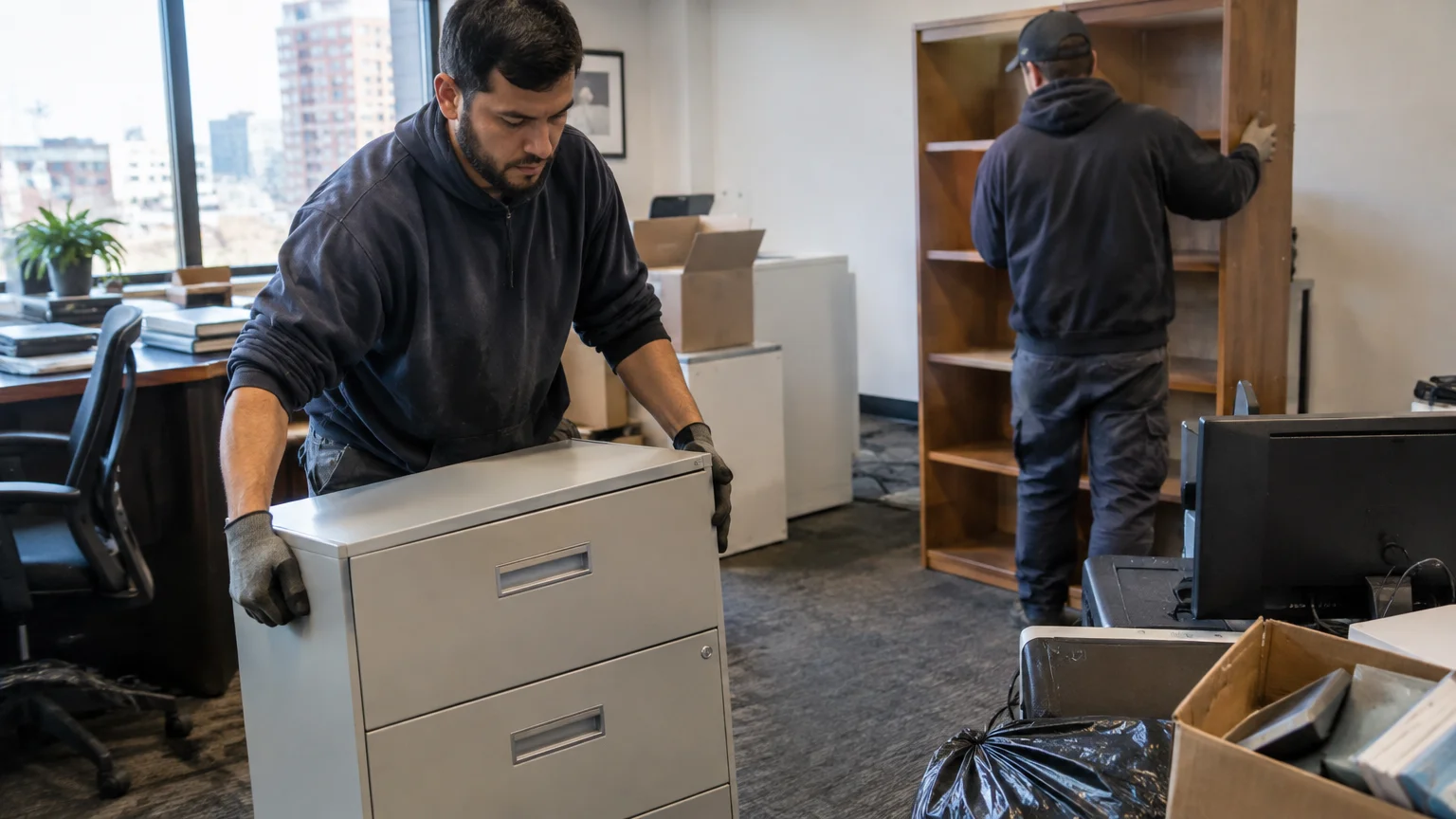
Which factors influence the final removal quote
The item count is only one part of the picture. A small but heavy safe may take more work than several light chairs. Stairs, long carry distances, tight halls, elevators, and limited loading access can change the job.
Furniture condition matters too. A clean desk may move whole, while a damaged cubicle may need careful disassembly. Glass, mixed materials, electronics, and items needing separate handling can affect the removal plan.
Businesses should request a clear quote after sharing key details. The final cost is confirmed on a quote from the selected provider. Compare the service scope instead of relying on a general estimate.
How office furniture removal compares with handling items in-house
Handling furniture in-house may work for a few light pieces. It becomes harder when staff must lift heavy items, arrange vehicles, protect the property, and find a proper place for materials.
A professional service may save staff time and reduce lifting risks. It can also help meet a move-out or renovation deadline. The best choice depends on the furniture, building, team, and schedule.
Bend OR Junk Removal can explain the steps for businesses. Review service terms before scheduling the work.
How can you prepare for an efficient office furniture pickup?
An efficient office furniture pickup starts with sorting items, clearing paths, protecting company property, and choosing a useful pickup window. Good preparation helps the crew work faster. It also reduces confusion about what should leave.
A practical checklist for sorting and clearing furniture
Walk through the property before pickup. Identify every item, remove personal property, and mark furniture that stays. Confirm who can approve changes if the crew finds an item missing from the list.
Before the crew arrives, the business should:
- Empty drawers, cabinets, shelves, and desk surfaces
- Remove records, keys, electronics, and personal belongings
- Label furniture that must stay in the building
- Clear paths through offices, halls, stairs, and loading areas
- Confirm building access, parking rules, and elevator limits
- Tell the crew about glass, wiring, damage, or unusual items
When to schedule removal before a deadline or property handoff
Schedule removal before the last possible day. A delay can affect cleaning, construction, inspection, or key handoff. Early planning also gives the business time to handle special items.
A property owner may need the space empty before a new tenant arrives. A contractor may need clear rooms before work begins. A manager may need the office open during removal. The schedule should match these needs.
A written list, clear access plan, and confirmed scope can make pickup easier. Bend OR Junk Removal can help plan office furniture removal across the main Bend area, from Old Mill District and Awbrey Butte to Redmond, Sisters, Tumalo, Sunriver, and nearby communities.
Frequently Asked Questions
What is included in office furniture removal?
Office furniture removal may include desks, chairs, cubicles, tables, shelving, cabinets, and other bulky workplace items. The exact service depends on the provider and agreed scope. Explain the item types, building access, disassembly needs, and disposal concerns before pickup.
Can a removal crew take furniture from an upper floor?
Many crews can remove furniture from upper floors, basements, and buildings with stairs. Access affects the work plan. Share details about elevators, narrow halls, parking, and building rules. Large or fragile pieces may need extra preparation.
Should office furniture be taken apart before pickup?
Not always. Some desks and cubicles move safely as complete units, while others need disassembly. Staff can remove loose items and personal property. Heavy or complex furniture may be better handled by the removal crew.
Can old office furniture be reused or recycled?
Yes, some office furniture can be reused, donated, or recycled when it is clean and sound. Metal, cardboard, and some wood parts may have separate handling options. Damaged or mixed-material pieces may need disposal. The provider can explain which options fit the items.
When should a business book furniture removal?
Plan removal before a renovation, relocation, closure, lease deadline, or property handoff. Early scheduling gives the team time to sort records, clear paths, and identify special items. It also lowers the risk of leaving bulky furniture until the final day.
Key takeaways
- Unsafe, damaged, or crowded furniture may need professional help.
- Renovations, moves, closures, and deadlines need early planning.
- Staff can handle light sorting, but heavy lifting needs care.
- Clear paths and building details help prevent pickup delays.
- The final cost is confirmed on a quote after the job is reviewed.
Conclusion
Eight common signs point to a need for professional office furniture removal: unsafe pieces, crowded work areas, renovations, staff moves, closures, blocked access, oversized furniture, and tight deadlines. A planned service can help protect workers and property while keeping the office on schedule.
Businesses do not need professional help for every light item. They can empty drawers, label furniture, and clear small objects when it is safe. Heavy lifting, difficult access, fragile materials, and large office cleanouts call for a more careful plan.
For office owners and property managers, Bend OR Junk Removal can help organize the next step. Contact us to arrange an office furniture pickup that fits the property, items, and schedule.